
Last Updated: 10 months ago
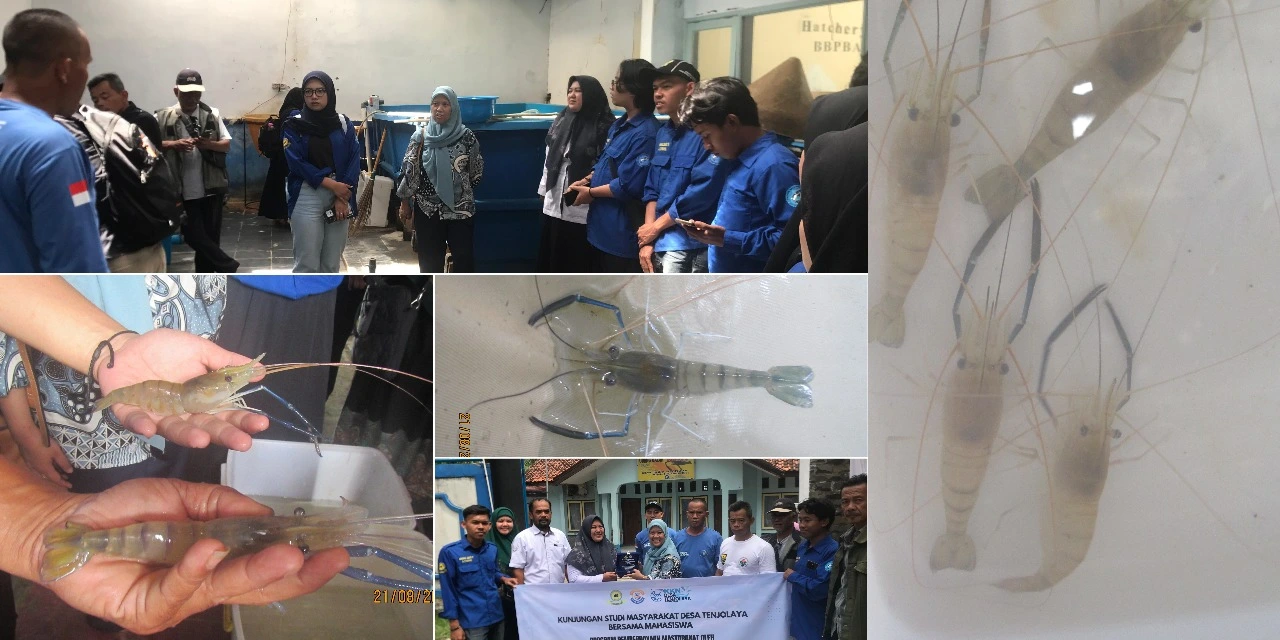
Sukabumi, August 21, 2025 – As part of the Community Empowerment Program by Students (Program Pemberdayaan Masyarakat oleh Mahasiswa – PMM), the Aquaculture Study Program of the Faculty of Agriculture, Universitas Djuanda, carried out a series of activities funded by the Ministry of Higher Education, Science, and Technology. One of the enrichment activities was a study visit to the Center for Freshwater Aquaculture Development (BBPBAT) in Sukabumi, which brought together local fish farmers’ groups (Pokdakan) and the youth organization (Karang Taruna) of Tenjolaya Village with aquaculture experts who have long developed giant freshwater prawn cultivation. The program aimed to strengthen both community members’ and students’ technical capacity in prawn aquaculture. During the session, held on Thursday, August 21, 2025, BBPBAT experts provided practical tips and techniques for giant freshwater prawn farming. The participants, consisting of fish farmers and students, actively engaged with the trainers, asking questions and responding enthusiastically to the material presented.
On this occasion, Mrs. Puput, representing BBPBAT, expressed her appreciation: “We are delighted to welcome the community of Tenjolaya and Universitas Djuanda students to learn aquaculture techniques. We hope this collaboration will boost local production, which is still relatively limited.” Community representatives also expressed their hope that this activity would broaden their knowledge and expand existing aquaculture businesses in the village. Meanwhile, the participating students were grateful for the technical skills provided, which will enable them to collaborate with the community in developing a polyculture aquaculture system.
The application of polyculture—combining giant freshwater prawns with tilapia— is expected to improve productivity, diversify harvests, and strengthen local food security in Tenjolaya. Dr. Eko Rini Farastuti, M.Si, Head of the Aquaculture Study Program and leader of the PMM grant, emphasized: “Through this theme, we hope to make a positive contribution to the development of aquaculture in Indonesia, particularly in West Java and Tenjolaya Village.” The Aquaculture PMM team also extended gratitude to the Rector and the LP3K team of Universitas Djuanda for their full support. This program stands as proof of the synergy between academia and local communities, showcasing the university’s commitment to delivering real impact through knowledge transfer. "May the Aquaculture Study Program continue to grow and bring benefits to society," the team concluded.