
Last Updated: 5 months ago
Student competence in mastering knowledge, skills, and attitudes serves as an indicator of their ability to apply the theories learned in their courses. The Aquaculture Study Program, as part of the Faculty of Agriculture at Djuanda University, is responsible for enhancing student competence in the fields of fisheries and marine sciences. To strengthen these competencies in specific subjects, practical fieldwork (practicum) sessions are conducted.
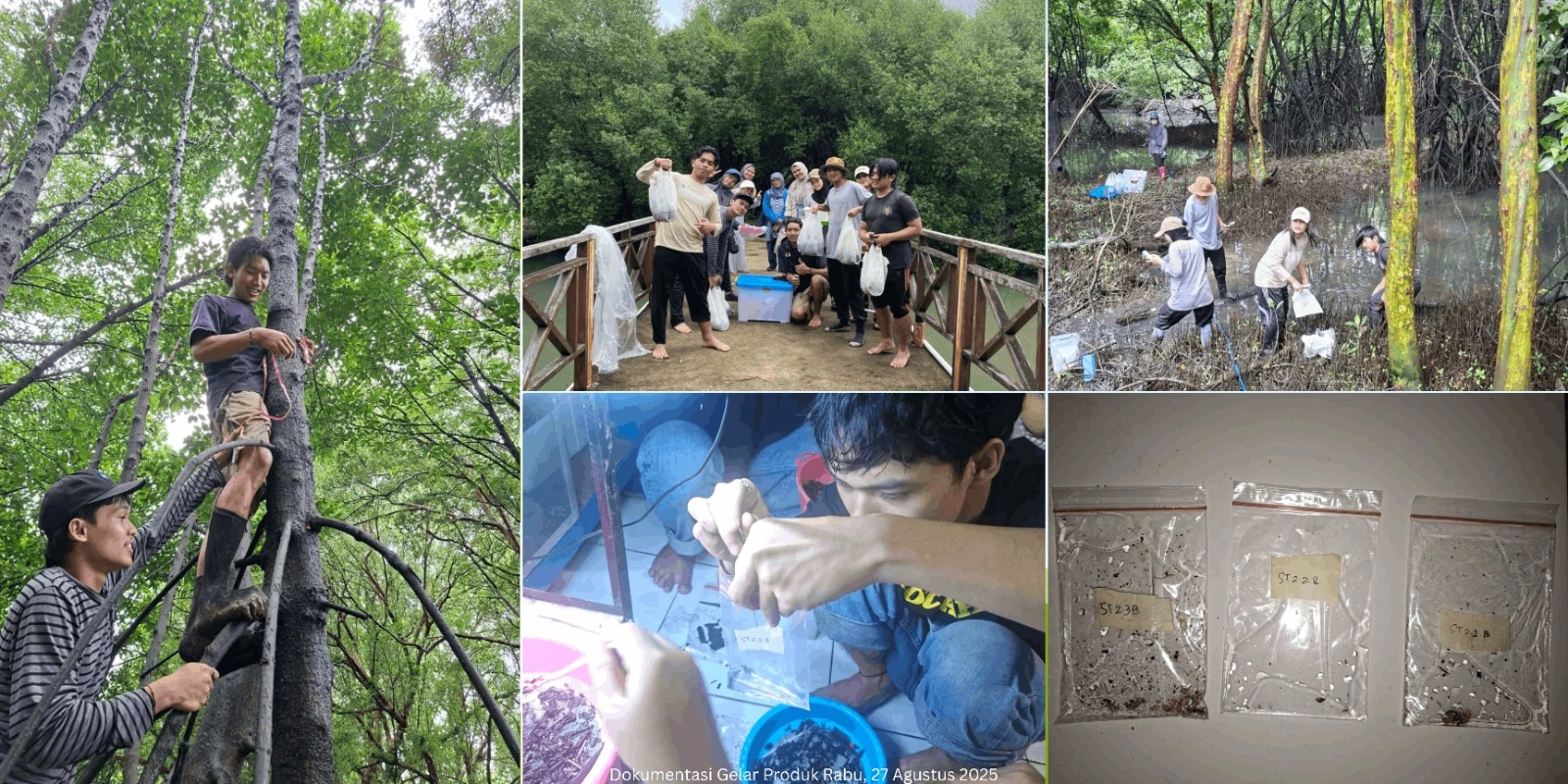
The Aquatic Ecology (Ekoper) practicum is led by Dr. Eko Rini Farastuti, M.Si. This course's practicum is intended to be an implementation of learning activities that impact both internal academic progress and the community, particularly in conservation areas.
The activities began with a field observation, followed by:
Determining sampling points.
Collecting samples for mangrove species identification.
Vegetation analysis.
Sampling techniques for benthos and periphyton.
Water quality analysis.
Following the field session, advanced laboratory work (sorting and data analysis) will be conducted at the Aquatic Laboratory, Aquaculture Study Program, Faculty of Agriculture, Djuanda University. The field site was located at the Angke Kapuk Mangrove Nature Tourism Park, North Jakarta.
Alhamdulillah, the Aquatic Ecology practicum proceeded smoothly. It is expected to provide students with various sampling techniques essential to aquatic ecology. Although the introduction to these techniques lasted only one day, it aimed to provide a comprehensive overview of sampling diverse biota within mangrove and coastal environments.
In a separate statement, the Dean of the Faculty of Agriculture at Djuanda University emphasized that the Faculty will continue to support the mastery and enhancement of student competencies to ensure that learning has a direct impact on student quality. The Dean also expressed high appreciation and gratitude to the students and the supervising lecturer. It is hoped that the Aquaculture Study Program will continually contribute to society, especially regarding mangrove conservation areas.
(AKU-Ekoper_270126)