
Last Updated: 1 month ago
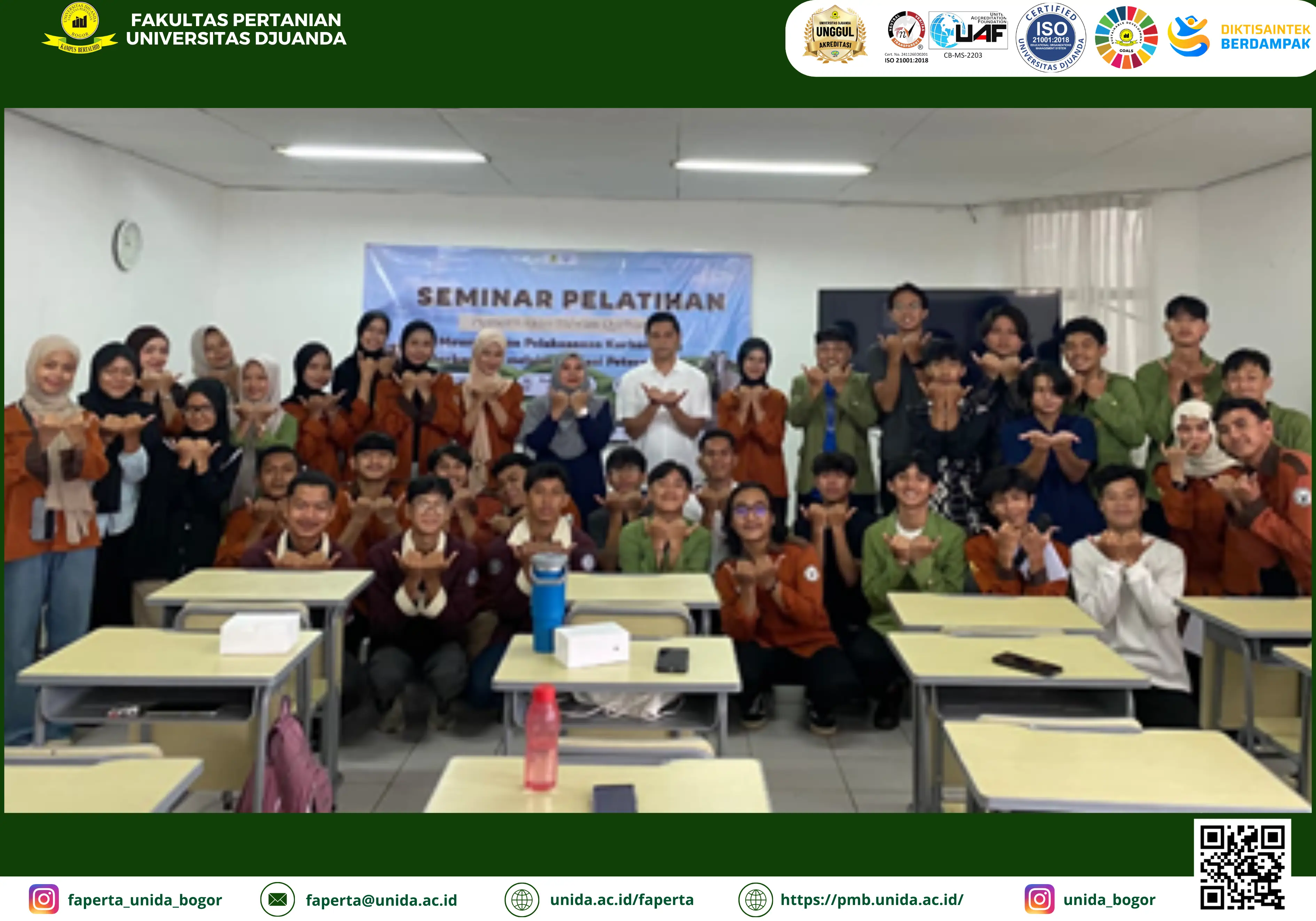
BOGOR – Anticipating the upcoming celebration of Eid al-Adha 1447 H, the Animal Husbandry Student Professional Association (Himpromapet) of the Faculty of Agriculture (FAPERTA) at Universitas Djuanda (UNIDA) successfully held a Training Seminar on Sacrificial Animal Inspection on Saturday (May 23, 2026). The event, which took place at the UNIDA Bogor Campus, aimed to equip future animal husbandry graduates with real-world field competencies to ensure the eligibility and safety of sacrificial animals (qurban).
This strategically valuable event was attended not only by internal students of FAPERTA UNIDA but also drew the interest and active participation of animal husbandry students from the College of Vocational Studies (SV) of IPB University, who joined the collaboration to expand their academic horizons.
The event was officially opened by the Dean of FAPERTA UNIDA, Dr. Abdullah Baharun, S.Pt., M.Si. In his opening remarks, he expressed high appreciation while emphasizing the critical role that animal husbandry students play in the community during the momentum of Eid al-Adha.
"An understanding of proper and standardized handling of sacrificial animals is no longer just a theory, but our moral obligation. This activity is highly crucial so that students can ensure the handling process thoroughly meets the principles of animal welfare, health, and halal aspects," stated Dr. Abdullah Baharun.
The training featured two veterinary health experts who thoroughly discussed the chain of sacrificial animal management from upstream to downstream:
Animal Welfare & Antemortem Inspection In the first session, drh. Annisa Rahmi, M.Si. presented material on the importance of implementing animal welfare principles (kesrawan), particularly during mobilization (transportation) and prior to slaughter.
"Animals that experience stress before slaughter will suffer a decline in carcass and meat quality. Therefore, humane handling and antemortem inspection (before slaughter) are mandatory to ensure the animals are completely healthy and fit according to Islamic law (sharia)," she explained.
Postmortem Inspection & Hygiene Sanitation Entering the second session, drh. Agung Puji Haryanto, SKH., M.Si. delved deeper into the technicalities of postmortem inspection (after slaughter). He highlighted the vital importance of precision when examining internal organs (viscera) and carcass conditions after the animal is slaughtered.
"This step serves as the final defense to guarantee that the meat distributed to the public is free from diseases, safe for consumption, high in quality, and meets the hygiene standards of consumption eligibility," he emphasized.
Through this excellent collaboration between UNIDA and SV IPB, the participants are expected to gain a comprehensive understanding. The output of this training is designed to prepare students to directly deploy into the community as part of the sacrificial animal monitoring team.
With a solid scientific background, it is hoped that the implementation of the qurban worship will not only be valid under sharia jurisprudence but will also be capable of producing meat that is ASUH (Safe, Healthy, Intact, and Halal) for the welfare of the public.