
Last Updated: 1 year ago
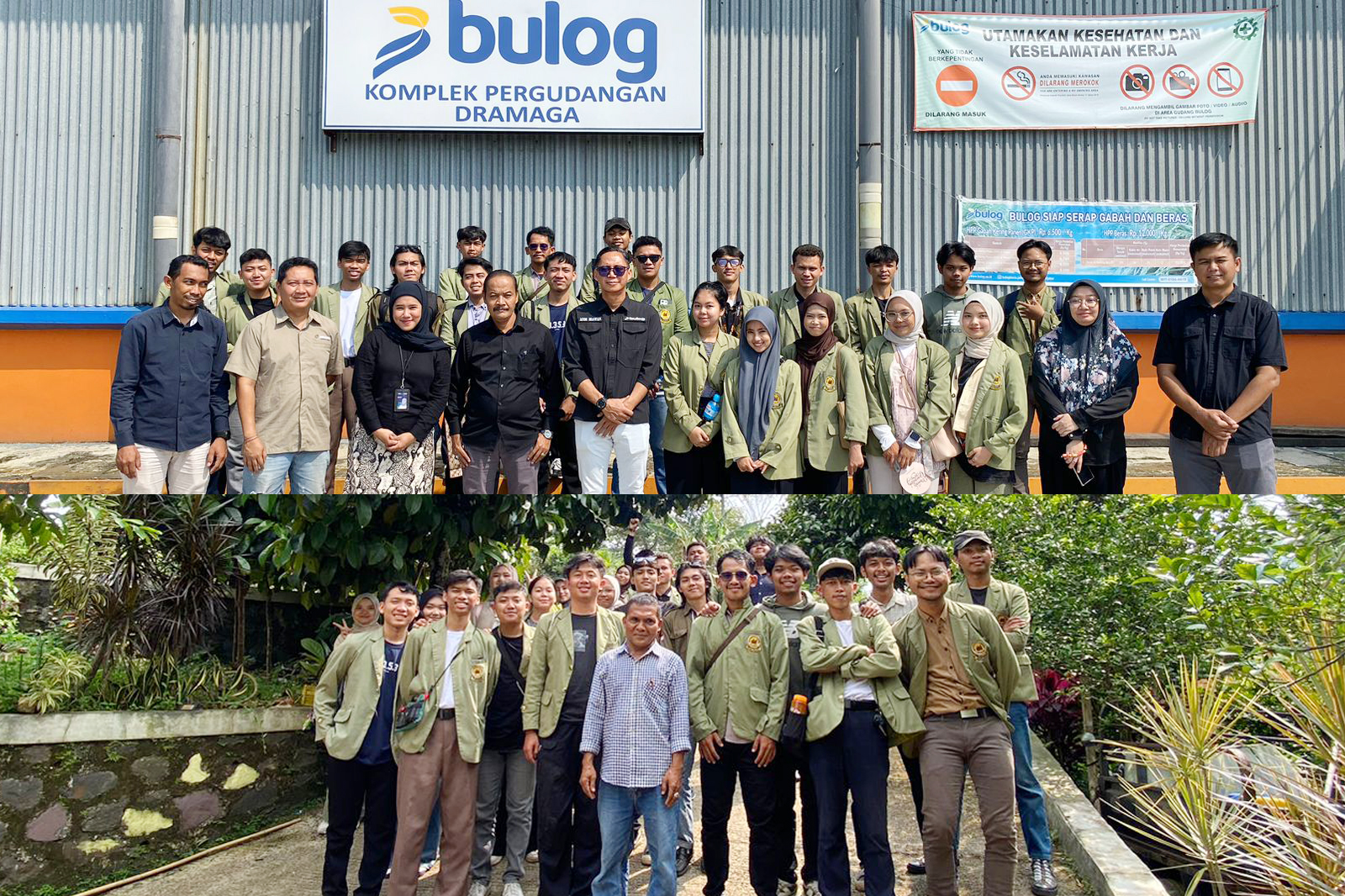
As part of its effort to strengthen students’ understanding of supply chain management implementation in the food sector, the Faculty of Agriculture (FAPERTA) at Universitas Djuanda (UNIDA) carried out an educational visit to the BULOG Warehouse in Dramaga, Bogor and the Bina Warga Tani Farmer Group in Kampung Kadu, Leuwiliang, Bogor Regency, on Wednesday, June 25, 2025.
The activity was attended by 26 students from the Agribusiness and Agrotechnology Study Programs of FAPERTA UNIDA, and aimed to provide hands-on experience in the distribution and food management processes—from the perspective of a national agency and that of local farmers.
The visit began at the BULOG Warehouse in Dramaga, where students were welcomed by Riki, Assistant Manager at BULOG. In his presentation, Riki explained the strategic role of BULOG in ensuring food availability and distribution across the country. He stated that BULOG applies strict quality standards in rice procurement, with a maximum moisture content of 14% and a broken rice limit of 25% based on three sack samples.
“In addition, storage technology and stock rotation systems are essential parts of our strategy to maintain freshness and food quality,” he explained.
Riki also highlighted the challenges of distributing food to remote areas, which in some cases can only be accessed by boat, canoe, or small aircraft—underscoring the complexity of BULOG’s task in supporting national food security.
The next stop was the Bina Warga Tani Farmer Group, managed by Edi Warma, who focuses on mangosteen cultivation. Edi stressed the importance of maintaining a continuous and connected supply chain, and the vital need for synergy between farmers, traders, and consumers.
“How can trade happen if the supply chain is disconnected?” he asked.
Beyond sharing technical knowledge, Edi also conveyed a philosophy of farming as a form of love and devotion. He spoke of planting mangosteen trees as a long-term legacy for future generations, given that the trees can live up to 350 years.
“A sincere person is a wealthy person,” he said with conviction.
For the students, this visit served not only as field-based learning, but also as a reflection on the strategic role of agriculture in building food security and community well-being. It is hoped that graduates of agricultural sciences will become agents of change who can bring meaningful impact to the nation.